
Birds decide when to migrate by integrating internal biological clocks with external environmental cues. For many species, the changing length of daylight (photoperiod) is the primary trigger that initiates physiological changes for migration. However, the reliance on these cues varies significantly by species: long-distance migrants often depend on genetically ingrained timing programs, while short-distance migrants show greater flexibility to adjust their departure dates based on local weather and food availability.
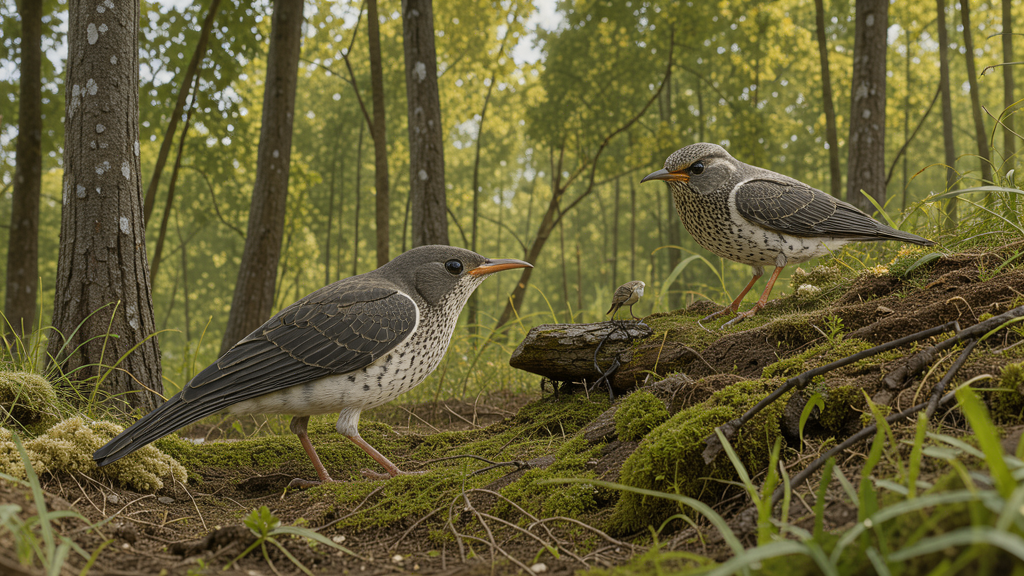
Photoperiod, or the duration of daylight, is widely recognized as the most important external cue for initiating migration in songbirds. It acts as a reliable predictor of seasonal change, allowing birds to prepare physiologically for the journey. Research on European robins (Erithacus rubecula) and garden warblers (Sylvia borin) demonstrates that these birds possess endogenous programs that respond to light-dark cycles. European robins, a short-to-medium distance migrant, showed partial sensitivity to photoperiodic cues regarding their migratory restlessness (zugunruhe). In contrast, garden warblers, a long-distance trans-equatorial migrant, showed little sensitivity to photoperiod during autumn migration, suggesting a stronger reliance on other external cues or internal timing mechanisms for their time-constrained journeys.
The degree to which birds rely on innate timing versus environmental adjustment is often linked to migratory distance. A study on Bobolinks (Dolichonyx oryzivorus), a long-distance migrant, found that genetic relatedness was highly correlated with the timing of four out of seven migratory events, but not with the timing or latitude of the three events involving water crossings and South American departure. This supports the theory that long-distance migrants rely heavily on genetically ingrained behaviors to maximize survival during risky, long journeys. Conversely, short-distance migrants are more likely to adjust their timing to match non-endogenous cues like local weather conditions.
However, individual variation plays a crucial role in how populations track environmental changes. Research on migratory waterfowl, including the greater white-fronted goose (Anser albifrons) and tundra bean goose (Anser serrirostris), shows that species with intermediate levels of individual variation tend to align their migration timing better with shifts in spring green-up. Species with excessive individual variation may show limited phenological tracking, which can hinder adaptive responses at the population level.
Understanding these mechanisms allows birders to contribute to community science by documenting phenological shifts. Here is a concrete exercise to observe how local conditions influence migration timing:
Field Identification Cues: To ensure accurate records, use these specific marks: American Robins are distinct for their orange-red breast and black head, often seen hopping on lawns. Bobolinks in spring are strikingly black with a white back, while in fall they become streaky brown; listen for their high-pitched, trilling song. Barn Swallows are identified by their deep forked tail, blue-black upperparts, and rufous throat, frequently seen hovering near open water or fields.
By documenting these patterns, you help build the long-term datasets necessary to understand how climate change affects migratory phenology.
It is important to recognize that migration timing is not a fixed trait for all individuals within a species. Individual variation in response to environmental cues can lead to different outcomes at the population level. For example, in waterfowl, intermediate individual variation allows for more synchronous responses to climate change, whereas excessive variation can reduce population-level synchrony. This variability means that while species-level trends can be identified, individual birds may deviate from the average pattern based on their own physiological state and local conditions.
This stability in migration timing can create new ecological risks when interacting with climate-sensitive factors. For instance, a study of migratory thrushes in Belgium found that late-autumn migration coincided with high tick activity under mild climatic conditions, resulting in exceptionally high infestation rates. Because bird migration timing is relatively stable while parasite activity is temperature-dependent, continued warming is likely to strengthen this phenological overlap, exposing birds to increased parasite loads during their most vulnerable period.
Researchers are increasingly using machine learning to model these complex decision-making processes. Hybrid models, such as those combining fluid dynamics-inspired movement models with recurrent neural networks, can predict continental-scale migration patterns by learning from sparse observation data. These models help interpret how birds integrate multiple environmental variables to make migration decisions, providing a framework for understanding the ecological implications of changing environmental cues.
For birders, these models translate abstract data into practical predictions. By analyzing historical movement data and environmental variables, such models can forecast specific arrival windows and identify critical stopover sites. This allows observers to anticipate when and where to look for specific species, turning broad ecological trends into actionable field opportunities.
