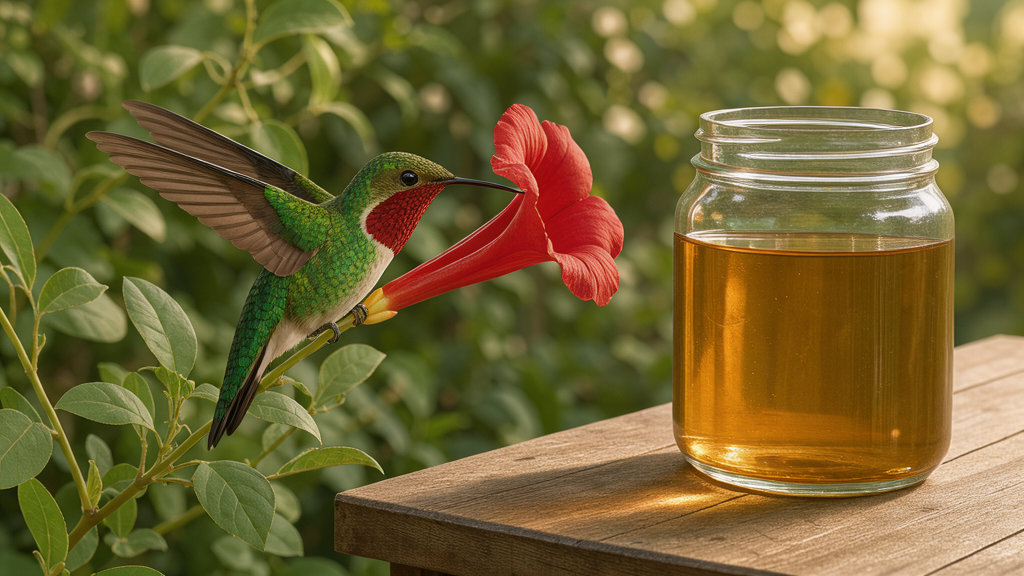
The standard hummingbird nectar recipe is 1 part white granulated sugar to 4 parts water. This ratio approximates the sugar concentration of natural floral nectar, providing the high-energy fuel hummingbirds need without the risks associated with honey or artificial sweeteners.
Original BirdBot editorial illustration generated locally on the Jetson Thor; not an identification reference.
Why the 1:4 Ratio Matters
Hummingbirds are high-energy consumers that rely on nectar for fuel. The 1:4 ratio (25% sugar concentration) is a widely used baseline that supports hummingbird metabolism. While natural floral nectar varies in sugar content and osmolarity, this ratio provides a consistent energy source without being overly concentrated, which can encourage microbial growth in feeders.
What to Never Use in Nectar
While the recipe is simple, certain common ingredients are unsuitable for hummingbird feeders. Avoid the following:
Honey: Honey can ferment quickly in warm weather, producing alcohol and acids. It also contains complex sugars and proteins that hummingbirds cannot digest efficiently.
Red Dye: Artificial red dye is unnecessary because hummingbirds are attracted to the red color of the feeder itself. Use a red feeder or red feeding ports instead.
Artificial Sweeteners: Sweeteners like aspartame or sucralose provide no caloric value. Hummingbirds need real sugar (sucrose) for energy; sweeteners may trick them into feeding without gaining the necessary fuel, leading to starvation.
How Often to Change Nectar
Nectar in feeders is a breeding ground for mold and bacteria, especially in warm weather. The frequency of changing nectar depends on ambient temperature:
Hot Weather (Above 80°F/27°C): Change nectar every 2–3 days. Fermentation and mold growth accelerate in heat.
Mild Weather (60–80°F/15–27°C): Change nectar every 4–5 days.
Always discard nectar if it appears cloudy, smells sour, or has visible mold. Do not attempt to "clean up" old nectar; discard it and clean the feeder thoroughly.
Cleaning Your Feeder
Proper cleaning is essential to prevent the buildup of mold, bacteria, and biofilm. Follow this checklist:
Empty and Rinse: Discard old nectar and rinse the feeder with warm water.
Scrub: Use a small brush (such as a bottle brush or dedicated feeder brush) to scrub all interior surfaces, including the feeding ports and reservoir.
Soak: Soak the feeder in a solution of 1 part white vinegar to 3 parts water for 15–30 minutes. Vinegar is effective at dissolving biofilm and killing mold spores.
Rinse Thoroughly: Rinse the feeder with clean water until no vinegar smell remains.
Dry: Allow the feeder to air dry completely before refilling. Moisture left in the feeder can promote mold growth.
Spotting Mold and Fermentation
Regular inspection of your feeder can help you catch issues early. Look for:
Cloudiness: Clear nectar should remain clear. Cloudiness indicates microbial growth.
Odor: Fresh nectar has a sweet smell. Sour or alcoholic odors indicate fermentation.
Visible Mold: Black, green, or white fuzzy patches on the feeder walls or feeding ports are signs of mold.
If you notice any of these signs, discard the nectar and clean the feeder immediately. Do not reuse nectar that has been contaminated.
Field Exercise: Observe Feeder Use
To better understand hummingbird behavior, try this observation exercise:
Set Up: Place a clean feeder with fresh 1:4 nectar in a shaded, quiet area of your yard.
Observe: Spend 15–20 minutes observing the feeder. Note the number of hummingbirds visiting, their behavior (e.g., hovering, feeding duration), and any interactions with other birds or insects.
Record: Keep a simple log of your observations, including the date, time, weather, and number of visitors.
Repeat: Repeat this exercise over several days to identify patterns in hummingbird activity.
This exercise helps you monitor feeder use and contributes to community science. You can submit your observations to platforms like eBird or the Hummingbird Society's monitoring programs, helping researchers understand hummingbird behavior and ecology.
Sources
The recommendations in this guide align with widely accepted practices from ornithological societies and birding communities. For further reading on hummingbird ecology and observation, consult resources from the American Birding Association or the Cornell Lab of Ornithology.