
Artificial feeding changes bird behavior by altering foraging patterns, influencing individual health and survival, and reshaping local bird community composition. While supplemental food can improve physiological condition and support winter survival, it also concentrates birds, potentially increasing disease transmission and altering competitive dynamics among species.
When observing feeders, note that the concentration of birds can facilitate the spread of pathogens. In one study, 8.3% of birds at feeders exhibited symptoms of conjunctivitis, pox, dermal disease, or cloacal disease at the peak of prevalence. The specific clinical signs of stress or disease are not detailed in the provided evidence, but the presence of such symptoms indicates that feeding does not uniformly benefit all individuals.
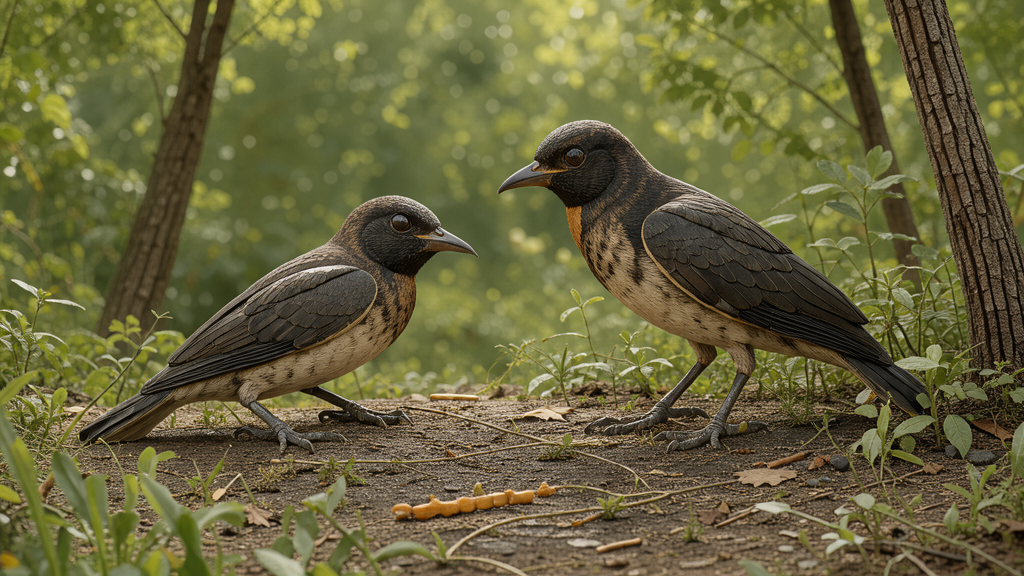
This synthesis examines how artificial feeding affects birds at three levels: individual behavior and fitness, local community composition, and population-level health outcomes. It specifically asks whether supplemental feeding provides net benefits or introduces ecological trade-offs, such as increased disease risk or altered species dominance.
Studies indicate that supplemental feeding can improve individual bird health. A study in central Illinois found that birds at feeder sites showed increased antioxidant levels, reduced stress hormones, and more rapid feather growth compared to birds at sites without supplemental food. These improvements persisted only while feeders were present, suggesting a direct link between food availability and physiological condition. However, the same study noted that birds with clear signs of pathology showed deficits in these metrics, indicating that feeding does not uniformly benefit all individuals.
In a different context, research on wood storks in the southeastern United States found that residency (staying in one area) was associated with higher nest survival when anthropogenic food subsidies were available. The study notes that migration evolved as an adaptation to fluctuating resource availability, but anthropogenic subsidies provide a steady food source not subject to seasonality. This suggests that for some species, the ability to exploit human-provided food can shift behavioral tactics from migration to residency, with direct fitness consequences.
Artificial feeding significantly alters which bird species are present in an area. A large-scale study in Poland found that urban areas had a significantly higher number of feeders available to birds than rural areas, though the proportion of feeders with food was similar in both. The study found that different types of bird feeders support only those species specialized for that particular food type, a relationship that was similar in both urban and rural areas. This highlights that the specific food offered and the feeder design influence which species are supported, rather than a simple dominance by a few generalist species.
Similarly, a study in Kraków, Poland, found that the number of food sources, including bird feeders, was a key predictor of winter bird species richness and density. Urban greenery and food availability positively influenced bird density, while noise negatively affected species numbers. This highlights that feeding is one of several urban factors shaping bird communities, interacting with habitat structure and pollution.
While feeding can improve individual health, it also creates conditions that may increase disease transmission. The Illinois study found that infectious disease prevalence was higher at feeder sites, with 8.3% of birds showing symptoms of conjunctivitis, pox, or other diseases at the peak of prevalence. This suggests that the concentration of birds at feeders can facilitate the spread of pathogens.
Other research on bird feeding innovations and parasitism suggests that species with higher rates of feeding innovation may face greater parasite pressure, indicating a potential evolutionary trade-off between exploiting new food sources and managing disease risk.
The evidence presents a clear trade-off: supplemental feeding can improve individual health and support winter survival, but it also increases disease risk and alters community composition. The net effect depends on the species, the local environment, and the feeding practices used. For example, while feeding may benefit generalist species in urban areas, it may not benefit specialist species that rely on natural food sources. Additionally, the benefits of feeding are context-specific; what works in one habitat may not work in another.
Several limitations affect the interpretation of these findings. First, many studies are conducted in specific geographic locations, such as Poland or the United States, and may not generalize to other regions. Second, the studies often focus on short-term effects, and long-term population-level consequences of feeding are less well understood. Third, the interaction between feeding and other urban factors, such as noise and light pollution, is complex and not fully disentangled in most studies. Finally, the studies often rely on observational data, which can make it difficult to establish causal relationships between feeding and bird health or behavior.
This synthesis is an AI-assisted evidence review, not original research or a peer-reviewed paper. It compares findings from at least three independently retrieved substantive sources, including studies on individual fitness, community composition, and disease risk. The sources were selected to provide a balanced view of the benefits and risks of artificial feeding. The synthesis distinguishes between bird activity and demonstrated benefits to people, correlation and causation, and local results and global generalizations.
Specific search terms included "supplemental feeding bird health", "urban rural bird feeder species composition", and "anthropogenic subsidies fitness consequences". Access was limited to abstracts and selected verbatim passages from peer-reviewed sources; full texts were not reviewed.
| Study | Setting | Method | Result | Limitation |
|---|---|---|---|---|
| Wilcoxen et al. (2015) | Forested sites in central Illinois, USA | Comparison of feeder and non-feeder sites; monitoring of individual bird health | Improved antioxidant levels, reduced stress, and faster feather growth at feeder sites; higher disease prevalence at feeders | Short-term study; specific to central Illinois; observational design |
| Tryjanowski et al. (2015) | Urban and rural areas in Poland | Counting birds and feeders in 156 squares; PCA analysis of species-feeder relationships | Urban areas had more feeders and different bird communities; feeder type influenced species composition | Specific to Poland; winter-only data; observational design |
| Ciach & Fröhlich (2016) | Urban area in Kraków, Poland | Line transect surveys; analysis of habitat, food, noise, and light effects | Food sources and urban greenery positively influenced bird density; noise negatively affected species numbers | Specific to Kraków; winter-only data; observational design |
Based on the evidence, specific management protocols such as cleaning frequency or food type are outside the scope of this synthesis. However, the studies suggest that feeder type and food availability significantly influence which species are supported. To minimize negative impacts, consider that different feeder types support different species, and that concentrating birds can increase disease risk. For detailed guidance on feeder hygiene and food selection, consult local wildlife health authorities or specialized birding resources.
