
Memorizing plumage is often insufficient for identifying warblers in fall because many species exhibit significant variation in age, sex, and molt condition. A more effective method involves integrating behavioral cues, vocalizations, and habitat context to form a holistic identification, reducing reliance on static visual features that can be misleading during migration.
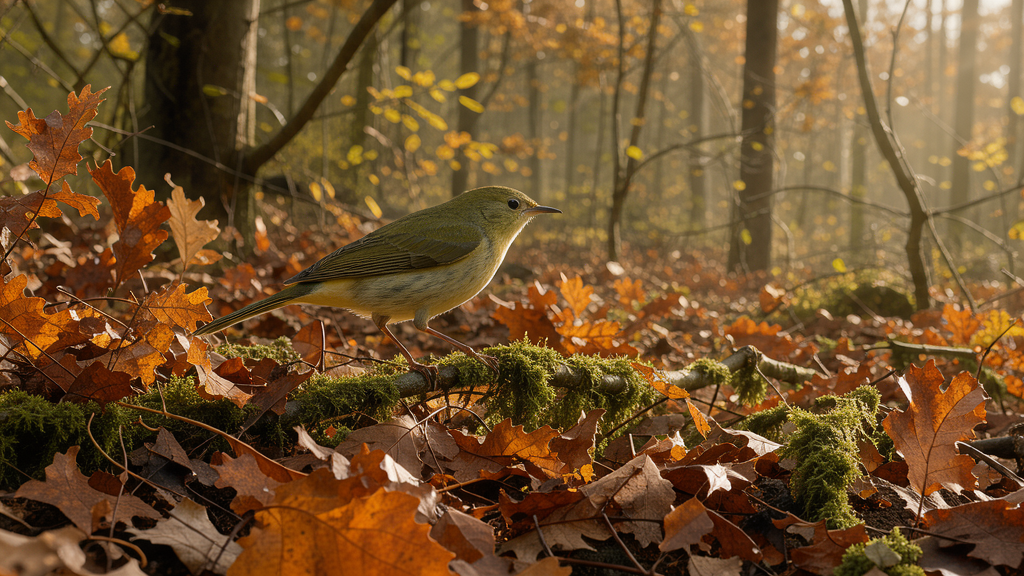
Warblers undergo complex molts that can result in intermediate plumages. First-fall birds may retain juvenile feathers, while adults in fresh fall plumage may look different from their spring counterparts. This variation means that a single "standard" look for a species is often a misleading target. Instead of searching for a perfect match to a field guide plate, observers should look for a range of acceptable variations.
For example, a first-fall Blackpoll Warbler may appear duller and less sharply patterned than its spring counterpart, while a first-fall Pine Warbler might show a more muted yellow wash and less distinct wing bars. These subtle shifts in color intensity and pattern clarity make static visual matching unreliable without considering the bird's age and molt stage.
Shift your focus from static features to dynamic ones. Use the following checklist to build a composite picture of the bird. Note that specific habitat and vocal contrasts should be verified against local field guides, as microhabitat preferences can vary by region and season.
| Cue | What to Observe | Example Contrast |
|---|---|---|
| Behavior | Foraging zone (canopy, mid-story, understory) and style (gape, sally, glean, probe). Watch for rapid tail flicks or head-down postures. | Black-and-white Warbler’s vertical trunk-climbing vs. Pine Warbler’s active foraging in the understory and mid-story. |
| Voice | Contact calls or short songs, even in fall. Listen for pitch, rhythm, and repetition. | Yellow Warbler’s clear, whistled notes vs. Blackpoll Warbler’s short, sharp contact calls. |
| Habitat | Position relative to forest structure and microhabitat preference. | Observe whether the bird favors coniferous stands, mixed forests, or open shrubby areas near water. |
| Plumage Range | Full spectrum of possible plumages (first-fall, adult, transition). | Ask: "Could this bird be a first-fall, adult, or in transition?" |
Next time you observe a warbler in fall, try this exercise: Before looking at the bird, listen for 30 seconds. Note the quality of any calls, such as the short, sharp contact calls of a Blackpoll or the clear, whistled notes of a Yellow Warbler. Then, observe the bird's foraging behavior for 60 seconds, noting specific actions like tail movements, probing, or sallying flights. Only after gathering this behavioral and auditory data, look at the plumage. This sequence forces you to use multiple senses and reduces the bias of visual confirmation, helping you distinguish species that may look similar in intermediate plumage.
To make this data usable, record your observations in a simple log format. This is a template; approximate counts or qualitative descriptions (e.g., "frequent tail flicks" rather than an exact number) are perfectly acceptable for community science contributions.
Time: 14:30
Location: Oak-hickory understory, 50m from trail
Behavior: Gleaning leaves, frequent tail flicks, no sallying
Voice: Short, clear whistled notes
Plumage: Yellowish, faint wing bars, no distinct eye-ring
Case Study: Blackpoll vs. Black-and-white Warbler
Consider a scenario where you encounter a small, dark warbler in a mixed forest. Visually, a first-fall Blackpoll Warbler and a Black-and-white Warbler can appear similar, both showing dark upperparts and lighter underparts. However, applying the structured method resolves the ambiguity. Listen first: a Blackpoll often gives short, sharp contact calls, whereas a Black-and-white Warbler is known for its distinctive, rhythmic "chick-a-dee-dee-dee" call. Observe behavior next: the Black-and-white Warbler is distinctive for its vertical trunk-climbing, often pausing to look up while moving up the trunk. In contrast, a Blackpoll Warbler is more likely to be seen gleaning leaves in the understory or mid-story, often with a more horizontal posture. Finally, check the habitat: while Blackpolls are often associated with coniferous or mixed forests, they are also frequently observed in deciduous forests during fall migration, so habitat alone is rarely definitive. By prioritizing behavior and voice over static plumage, you can confidently distinguish these two species even when their feathers are ambiguous.
This method is not infallible. Some warblers are silent in fall, and behavior can be subtle. When voice is unavailable, shift your weight to behavioral and habitat cues. For example, if a warbler is silent but exhibits rapid tail flicking and gleaning in a coniferous stand, a Blackpoll is a strong candidate, whereas a silent bird climbing vertically on a deciduous trunk points toward a Black-and-white. When in doubt, record the bird as a "warbler, sp." and note the specific cues you observed. This contributes to community science efforts and helps refine identification models over time.
