
To count birds accurately at your feeder, use a consistent time window and a clear definition of what constitutes a 'visit.' For small groups, count individuals one by one. For large flocks, use visual estimation or mark-and-recapture logic if possible. Consistency in method matters more than perfect precision for long-term trends.
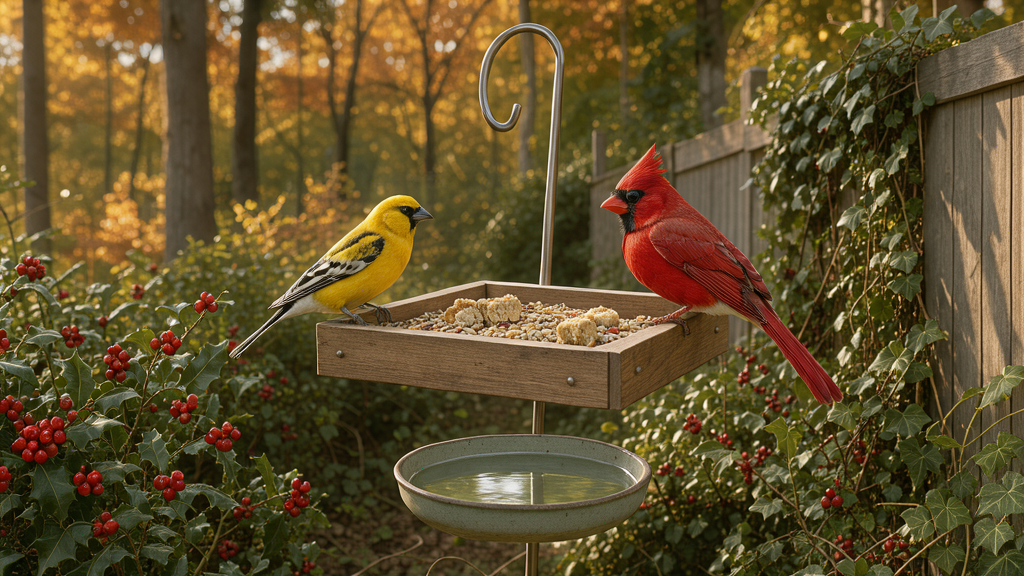
When contributing to community science datasets, the goal is often to track relative changes over time rather than absolute census numbers. Choose a method that you can repeat reliably every day or week. Consistency in method matters more than perfect precision for long-term trends.
Best for small groups (fewer than 10 birds). Watch the feeder and count each bird as it lands or leaves. If birds are moving quickly, pause and count the birds currently on the feeder, then resume. This method is most accurate but time-consuming.
For flocks of 10 or more, individual counting becomes difficult. Use visual estimation by comparing the group to known reference sizes. For example, if you know what 10 birds look like, estimate how many '10s' are in the flock. Round to the nearest 5 or 10 to reduce cognitive load and improve consistency.
Decide whether you are recording the peak number of birds present at once or the total number of unique birds seen during the session. Peak counts are easier to record and useful for measuring feeder activity. Total counts require tracking individuals, which is only feasible for small, slow-moving groups.
Concrete Example: In a 15-minute session, if 5 birds are on the feeder at the same time at 10:05 AM, your peak count is 5. If 12 different birds visit the feeder individually over the course of the 15 minutes, your total count is 12.
Double counting occurs when the same bird is counted more than once. This is common when birds move between feeders or when you lose track of individuals in a busy scene.
Visual estimation is a skill that improves with practice. To calibrate your estimates, periodically count a small flock individually and compare it to your estimate. Over time, you will develop a better sense of what 20, 50, or 100 birds look like in your specific yard.
When sharing your counts with community science platforms, include the method used and any notes on uncertainty. If you estimated a flock size, indicate that it is an estimate. This transparency helps researchers interpret the data correctly.
Choose one method and stick with it. Counting on entry or exit are both valid approaches; the critical factor is consistency to ensure your data is comparable over time. Counting on exit can be useful if birds linger on the feeder.
Visual estimation is less precise than individual counting but more practical for large flocks. It is a skill that improves with practice; periodically counting a small flock individually helps calibrate your estimates for trend analysis.
Pause your count, count the birds currently on the feeder, and use that number as your new baseline. This 'reset' technique helps maintain accuracy without stopping the entire session.
Focus on the species you are most interested in or that are most common at your feeder. You can always add more species later. Consistency in tracking a few key species is more valuable than sporadic counts of many species.
